


TL;DR:
Many Mercedes-Benz vehicles may need transmission fluid service around 40,000 to 60,000 miles, but this is a general planning range rather than a universal guideline. The correct schedule and service procedure depend on your specific vehicle.
Other things to know include:
- Check the model year, transmission, age, maintenance records, operating conditions, and owner’s manual for model-specific recommendations.
- Service A and Service B fluid checks do not necessarily include a transmission-fluid change so even if those have been done, you might still need transmission service.
- There is no universal transmission fluid for every Mercedes-Benz model.
- Las Vegas heat, unknown service history, or shifting problems may justify an inspection before service.
- Service costs depend on the required fluid, filter or pan design, labor, and vehicle condition.
For most Mercedes-Benz owners driven under normal conditions, it’s advisable to have transmission fluid serviced every 40,000 to 60,000 miles.
That’s right, Mercedes-Benz transmission fluid doesn’t last forever.
You might’ve heard about the sso-called“lifetime fill” myth, which suggests that transmission fluid lasts the lifetime of a vehicle. The problem with that is that some automakers equate the useful lifetime of a vehicle with the length of the new vehicle limited warranty, which in most newer Mercedes-Benz models is 4 years or 50,000 miles.
What’s more, nothing lasts forever on vehicles, least of all fluids. If that were not the case, Mercedes-Benz themselves would not need to include routine fluid checks in their recommended Service A and Service B inspections.
Each vehicle’s specific maintenance needs, in line with the owner’s manual, and how it’s been driven, ultimately dictate when Mercedes-Benz transmission fluid, which is susceptible to wear from heat, oxidation, contamination, and normal use, should be changed.
Not sure if your transmission fluid needs replacing or even what to look for? Consult a specialist in Mercedes-Benz repair in Las Vegas now.
How Do You Determine How Often Mercedes-Benz Transmission Fluid Should Be Changed in Your Vehicle?
How often should transmission fluid be changed in your specific Mercedes-Benz model? The manufacturer-provided maintenance information available for your specific vehicle is a good place to start when attempting to figure that out.
To access that information, Mercedes-Benz provides online owner’s manuals that can help you locate guidance for your specific model and year. Detailed requirements may also be found in separate maintenance documentation or through the vehicle’s digital maintenance system.
When reviewing the interval, consider:
- Model and model year
- Transmission type
- Current mileage and vehicle age
- Previous transmission-fluid service
- Driving habits and operating conditions
- Leaks, warning messages, or shifting problems
Consider also that Las Vegas heat and stop-and-go traffic can increase thermal demands on a transmission. This can skew how often you should change transmission fluid in practice, contradicting even official manufacturer suggestions for Mercedes-Benz transmission fluid changes.
What If I’ve Just Purchased a Used Mercedes-Benz?
If your Mercedes-Benz is new to you and you don’t know its history and there are no symptoms, follow its applicable maintenance schedule. If it has high mileage with no record of previous transmission service, have its condition evaluated before automatically requesting a flush.
Slipping, delayed engagement, leaks, or warning messages should also be diagnosed rather than treated as proof that the vehicle only needs fresh fluid.
Do Mercedes-Benz Service A & B Always Include Transmission Fluid Service?
When it comes to maintenance and service recommendations, Mercedes-Benz does things a little differently than other automakers. You’ve probably heard about Mercedes-Benz Service A and Service B intervals, which include routine fluid-level checks and corrections.
The key thing to be aware of here is that these service descriptions do NOT list a Mercedes-Benz transmission fluid change at every visit. Transmission service may be a separate model-, mileage-, or time-specific maintenance item. In other words, you should not think that just because you’ve had Mercedes-Benz Service A and B checks completed routinely; your car’s transmission fluid is fine. That is not always the case.

What Happens During a Mercedes-Benz Transmission-Fluid Service?
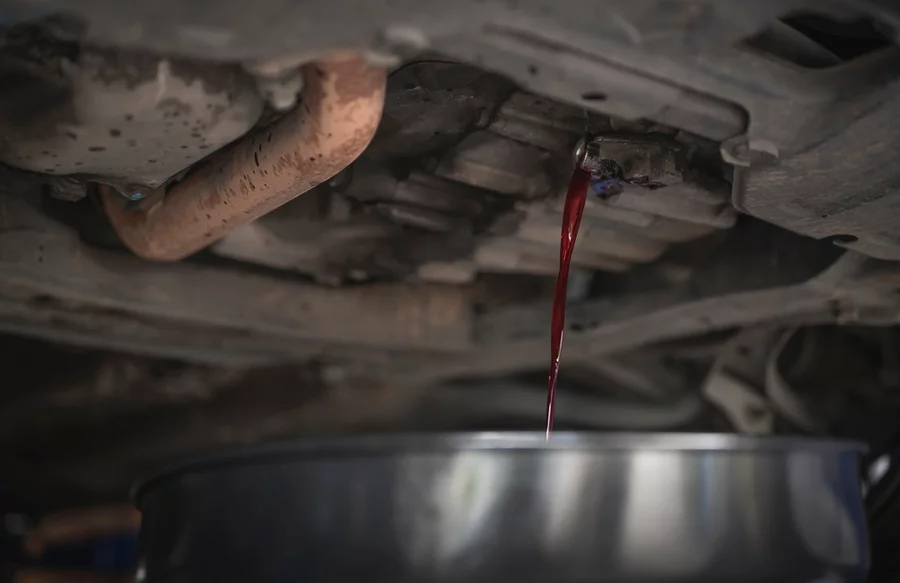
Depending on the vehicle, a transmission-fluid service may include:
- Inspecting the transmission for leaks and diagnostic faults
- Draining the existing fluid
- Checking the old fluid or pan for unusual debris
- Replacing the transmission filter when applicable
- Replacing or resealing the pan when applicable
- Refilling the transmission with the correct approved fluid
- Setting the fluid level using the prescribed temperature and procedure
- Road-testing the vehicle and checking for leaks
What Type of Transmission Fluid Do Mercedes-Benz Cars Take?
There is no single universal transmission fluid for Mercedes-Benz vehicles. Different transmissions can require different fluid specifications and service procedures. Fluid color or a label claiming compatibility with European vehicles does not confirm that a product is appropriate for a particular Mercedes-Benz model. For instance, some Mercedes-Benz models take blue transmission fluid and others take red transmission fluid.
Transmission service should be coordinated with the vehicle’s broader factory-scheduled maintenance. Keeping records of the fluid, filter, pan, and mileage at the time of service will also make future maintenance decisions easier.
What is the Average Mercedes-Benz Transmission Fluid Change Cost in Las Vegas, NV?
Prices can vary widely.
Looking for a specific amount for your vehicle? Give our Mercedes-Benz repair experts a call now or visit us in person for a fluid check. We can also help you figure out if it’s time for transmission fluid service or if you can wait.
Our goal is always to provide you with the highest level of service and honest answers rather than upcharging you or directing you towards service or maintenance that isn’t required.